

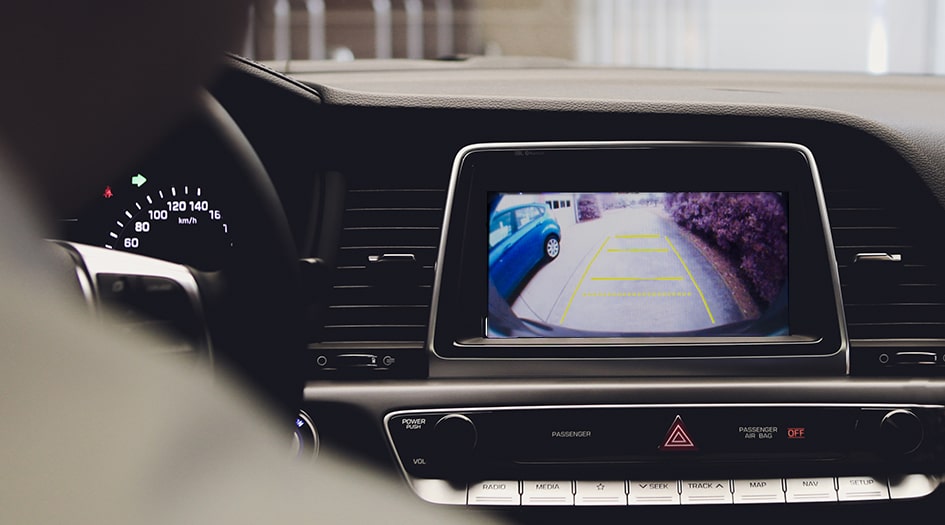
Not only are rear-view (or back-up) cameras a convenience many drivers have grown to love, but they’re also a safe and effective way to prevent accidents while backing up and parking — so much so that Transport Canada now requires every new car and small truck to have a rear visibility system (like a rear-view camera), as of May 2018. Learn how rear-view cameras work and what you should consider if you’re installing an aftermarket version in your vehicle.
How rear-view cameras work
Rear-view cameras don’t replace safe driving skills, but they give a much wider, clearer rear-view picture than you could possibly see in your mirrors alone — even performing a shoulder check doesn’t guarantee you’ll see the tiny tike on a tricycle behind your back bumper. But rear-view cameras don’t just help with backing out of parking spots and driveways; they also make it much easier to back into parking spaces or parallel park with precision in tight quarters.
Many rear-view camera screens feature coloured lines that indicate the distance between your vehicle and the objects behind it. While the measurements and corresponding colours vary by manufacturer, there are usually lines of some kind that indicate the approximate width of your car, as well as the minimum “safe distance” between your car and whatever is behind it. Check your vehicle’s instruction manual or the manufacturer’s website to learn more about the features of your own back-up camera.
Stay on your toes and keep your rear-view camera clean
While rear-view cameras can make backing up a breeze, they don’t always come with full sensor systems, and a camera alone won’t usually beep or sound an alert if you’re getting too close to something. It’s important to be aware of your surroundings at all times, so don’t forget to check your side and rear-view mirrors and peek over your shoulder before carefully backing up.
Back-up camera maintenance is usually as simple as a wipe-down from time to time. But keep in mind that your view can be affected by the weather, the time of day (a glare from the sun, for example, can make in-car screens harder to read), and other environmental factors, so don’t skip your standard safety checks.
How to install an aftermarket rear-view camera
If you have an older vehicle that doesn’t have a rear-view camera, you are not currently required to install one since the regulation only applies to vehicles that were built and sold after May 2018. However, if you want to take advantage of the enhanced safety a rear-view camera could provide, there are plenty of aftermarket kits available that you can install yourself. Before buying one of these kits, read the packaging carefully and consider the following facts:
-
A higher resolution screen makes for a clearer picture — and increased safety
-
Wireless units transmit their videos via Bluetooth or radio signals, so you won’t have to string wires through the inside of your vehicle
-
Some kits mount on your license plate holder and only require a screwdriver, while others may require you to drill a hole and mount the camera in your bumper
If you don’t feel like breaking out the toolbox and installing a camera yourself, look for a local electronics retailer who provides an installation service.
Shopping for a new car with more up-to-date safety features? Don’t forget to talk to your insurance broker and make sure you’re covered before you drive it off the lot.
-
 March 4, 2025
How to choose the right vehicle for a teenage driver
Consider these tips while shopping for a vehicle for your teen to keep them safe on the road. -
 December 20, 2024
Canada’s most stolen vehicles of 2023
Is your vehicle at the top of car thieves’ shopping lists? Find out now and learn how to prevent vehicle theft. -
 December 18, 2024
10 items to keep in your winter driving emergency kit
Canadian winters can be unpredictable, especially when you’re out for a drive. Keep these emergency preparedness items in your car to stay safe and warm.
Are you a group insurance customer? Contact your group’s administrator or broker.